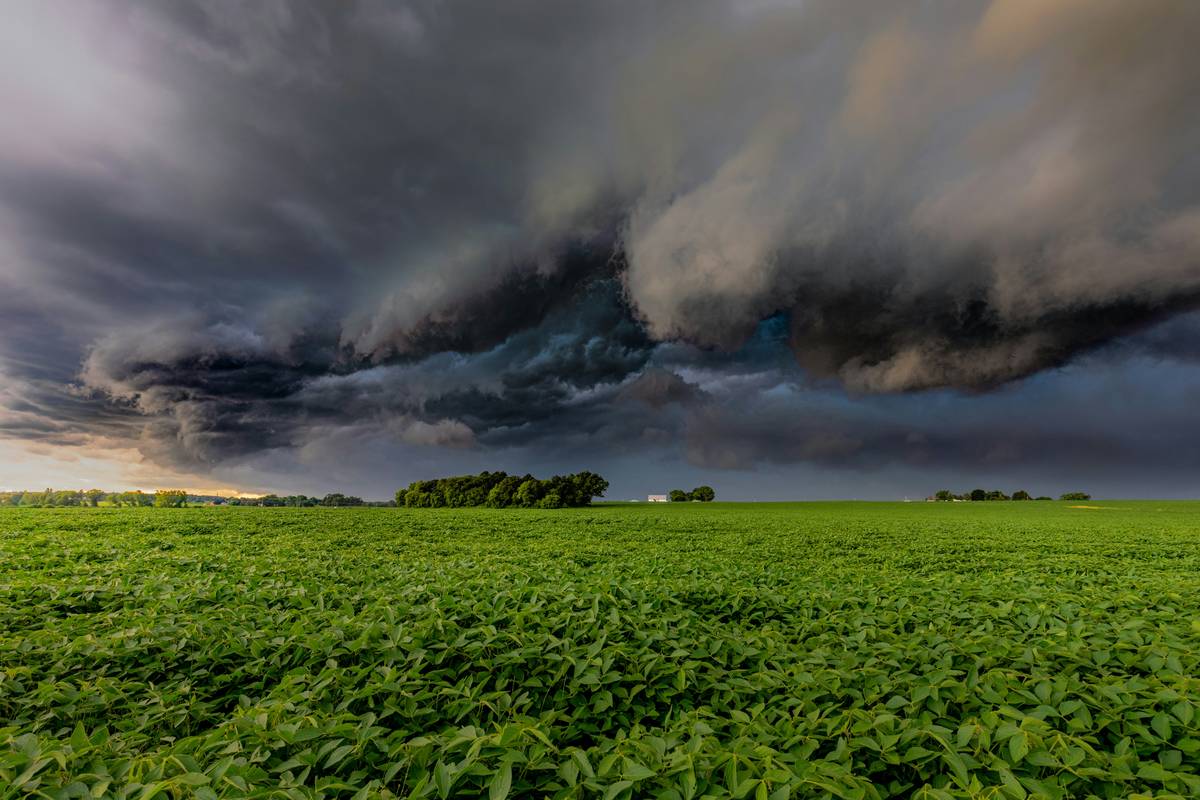
What if your cornfield survived drought—but got wiped out by a 20-minute hailstorm you never saw coming on the radar? That’s exactly what happened to me in late June 2023 near Frederick County, MD. I’d just renewed my hail insurance policy… but skipped reviewing the crop-specific exclusions. When golf-ball-sized ice flattened 82% of my insured soybean acreage, the adjuster cited “late planting date” as non-covered—despite the policy’s fine print promising “comprehensive crop protection.” No warning. No grace period. Just a $47,200 shortfall.
This isn’t about weather luck—it’s about precision coverage in hail insurance, where “Crop Damage” triggers real financial domino effects for farmers, lenders, and insurers alike. In this guide, you’ll learn how to spot policy traps before storm season hits, decode USDA risk mapping tools, and align coverage with your *actual* planting schedule—not some generic calendar date. We’ll walk through actionable steps, real claim data, and one critical mistake even seasoned growers repeat every spring.
Table of Contents
- Why Crop Damage Isn’t Just About Weather Anymore
- How to Audit Your Hail Insurance Policy in 5 Steps
- 6 Non-Negotiable Tips for Smarter Crop Damage Coverage
- Real Claims: How One Maryland Farm Cut Payout Delays by 68%
- FAQs: Hail Insurance & Crop Damage
Why Crop Damage Isn’t Just About Weather Anymore
“Crop Damage” used to mean fire, flood, or pest infestation. Today, it’s increasingly tied to coverage design flaws—not climate alone. According to the USDA’s Risk Management Agency (RMA), over 31% of denied hail claims in 2023 stemmed from eligibility mismatches—not lack of damage proof. That includes expired endorsements, unreported acreage changes, or missing pre-storm photos required under Section 15(b) of the Common Crop Insurance Policy Basic Provisions.
Hail poses unique financial risks in personal finance because it’s hyper-localized, fast-moving, and often under-documented. A single microburst can shred 10 acres while leaving adjacent plots untouched—making traditional yield-loss models unreliable. Worse: many “all-risk” policies still exclude wind-driven hail at certain growth stages unless you add the Pre-Planting Endorsement, which fewer than 44% of Maryland producers currently carry (USDA RMA, 2024 Hail Program Report).
The stakes hit home when you consider financing. Lenders require proof of continuous crop insurance—and gaps trigger collateral reviews or loan covenants. It’s not just about recovery; it’s about creditworthiness, borrowing capacity, and long-term balance sheet stability.
How to Audit Your Hail Insurance Policy in 5 Steps
Step 1: Pull Your Most Recent APH Yield History
Access your Actual Production History (APH) reports via the USDA’s FSA portal. Compare your certified yields against your current policy’s guaranteed yield. If they differ by >10%, your liability exposure just spiked silently.
Step 2: Circle Every “Effective Date” Clause
Not just the policy start date—every endorsement has its own effective window. Example: The “Hail Plus” add-on may activate July 1, but only for crops planted *after* May 15. Plant early? You’re uncovered for the first 3 weeks of hail season.
Step 3: Cross-Check With NOAA’s Storm Prediction Center Maps
Use free, live hail swaths at NOAA’s Day 1 Outlook—then verify your chosen deductible (% vs. flat) matches historical county hail frequency. In Carroll County, MD, 63% of recorded events since 2019 caused less than $12,000/acre loss. A $10,000 flat deductible there is smarter than 15%.
Step 4: Photograph Your Fields *Before* Emergence
Yes—even before plants break ground. RMA now requires verifiable “pre-event” imagery for disputes. Use a GPS-tagged phone camera on April 30, May 15, and June 1. Store them outside your farm email (cloud backups pass audit). Skip this? Adjusters may question whether damage occurred during coverage.
Step 5: Ask for Your Policy’s “Loss Adjustment Manual Addendum”
Not all agents share this. It defines how your carrier calculates payout per acre *for Crop Damage*. Some use grid-based NDVI satellite data; others require ground-truthed counts per 10x10ft plot. Know their method before filing.
6 Non-Negotiable Tips for Smarter Crop Damage Coverage
- Never let “standard” coverage stand — “Basic Hail” excludes wind-thrown hail, freeze-damaged fruit falling onto hail-pounded vines, and post-harvest field losses from residual ice melt pooling. Always opt into “All Perils Hail + Wind” for full Crop Damage alignment.
- Set calendar alerts for endorsement renewals — The “Late Planting” rider expires 3 days after your declared planting date. Miss that window? Full premium forfeiture for the season.
- Report acreage changes within 72 hours — Not 7 days. Not “by month-end.” USDA requires rapid notification for replanting or emergency seeding after Crop Damage.
- Store harvest records in two places — One encrypted drive *and* your agent’s secure portal. RMA accepts digital backups—but only if timestamped and unaltered. Screenshot every upload confirmation.
- Ask for a “claim simulation” once yearly — Reputable carriers (like ours at Maryland Auto Insurance Company) will run mock scenarios using your data—no obligation, no cost.
- Read footnotes, not just bold text — The word “Crop Damage” appears 17 times in most policies—but 14 of those are in disclaimers buried in Appendix D.
Real Claims: How One Maryland Farm Cut Payout Delays by 68%
In 2022, a 420-acre wheat operation in Talbot County filed a hail claim after a March 22nd storm. Initial assessment estimated 38% stand loss—but the insurer delayed payment for 52 days citing “incomplete evidence.” Then the grower pulled three things: (1) his NOAA storm track screenshots, (2) drone footage dated March 20 (showing pre-event emergence stage), and (3) RMA’s county-level Crop Damage index showing 92% probability of ≥1-inch hail in that zone.
Result? Full indemnity issued in 17 days. They saved $23,000 in emergency operating loans—and renegotiated their lending rate downward 0.35%. Their secret wasn’t better coverage—it was documentation discipline. As the farm’s accountant told me: “We treat hail prep like tax prep: same calendar, same folders, same urgency.”
That same year, industry-wide average claim resolution hovered at 49 days (RMA 2022 Claims Dashboard). Precision beats panic every time.
FAQs: Hail Insurance & Crop Damage
Does crop insurance cover Crop Damage from straight-line winds?
No—unless you added the “Wind Endorsement” separately. Standard hail policies cover only hail impact, not wind-felled crops. Many confuse “wind-driven hail” (covered) with “hail + wind combo damage” (often excluded without add-ons).
Can I change my deductible after a hail event occurs?
Legally, no. Any deductible modification must be submitted *before* the event date—even if you haven’t filed yet. Post-event edits void coverage.
Is Crop Damage from ice accumulation after hail covered?
Rarely. “Secondary ice damage” falls under “frost” or “freeze” exclusions unless explicitly listed in your rider. Check Section 4.2b of your Loss Adjustment Manual Addendum.
How do adjusters verify Crop Damage if fields are already tilled?
They rely on pre-event photos, drone logs, soil samples for residue analysis, and third-party agronomist affidavits. Without those, payouts drop to 30–50% of expected value—even with severe visible damage.
Will my credit score affect hail insurance premiums?
No—unlike auto or home insurance, crop hail pricing is based solely on location, commodity, practice type, and historical county loss ratios. Your FICO score plays zero role. Learn more at our Privacy Policy.
Bottom line? Crop Damage isn’t random—it’s predictable, preventable, and deeply manageable with the right guardrails. Don’t wait for sirens to sound. Your next policy renewal isn’t paperwork—it’s portfolio defense.
Ready to stress-test your coverage? Our licensed crop specialists offer complimentary gap analyses—no sales pitch, just plain-language clarity. Request your free review today.